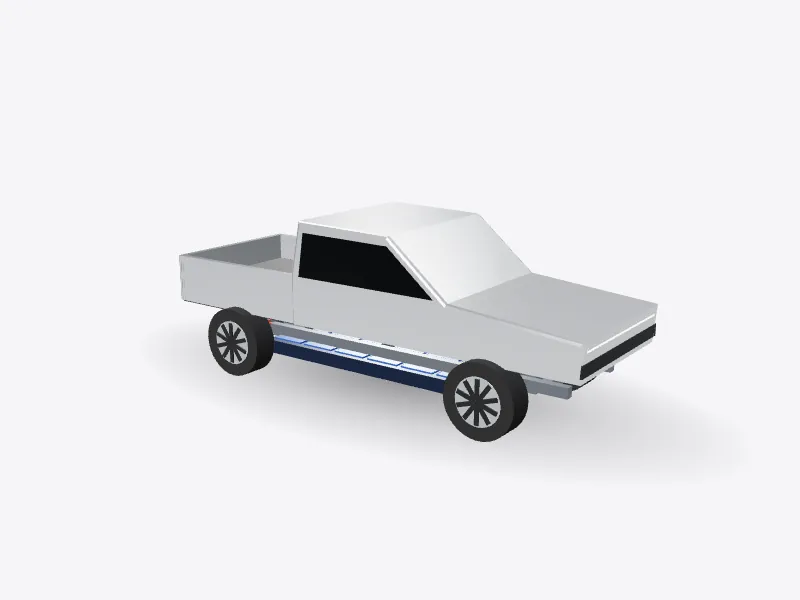
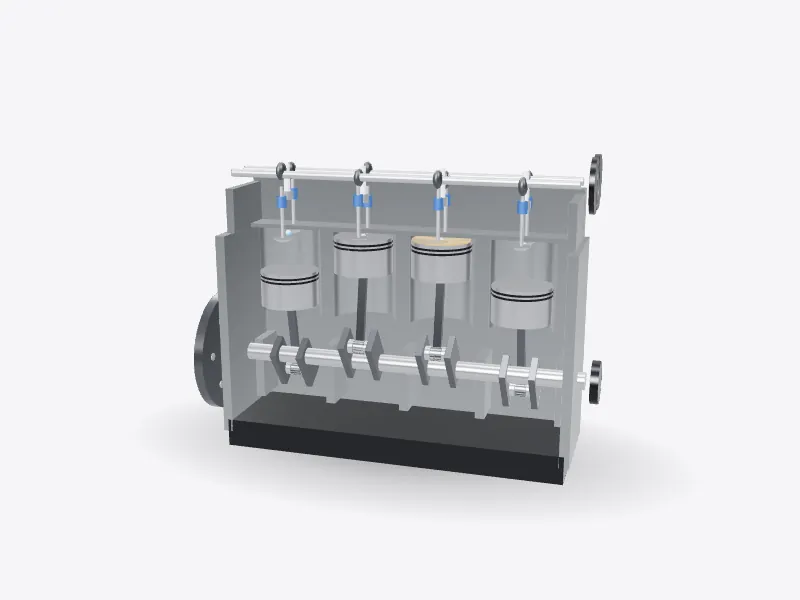
01 / 05
Overview
16 parts, one idea.
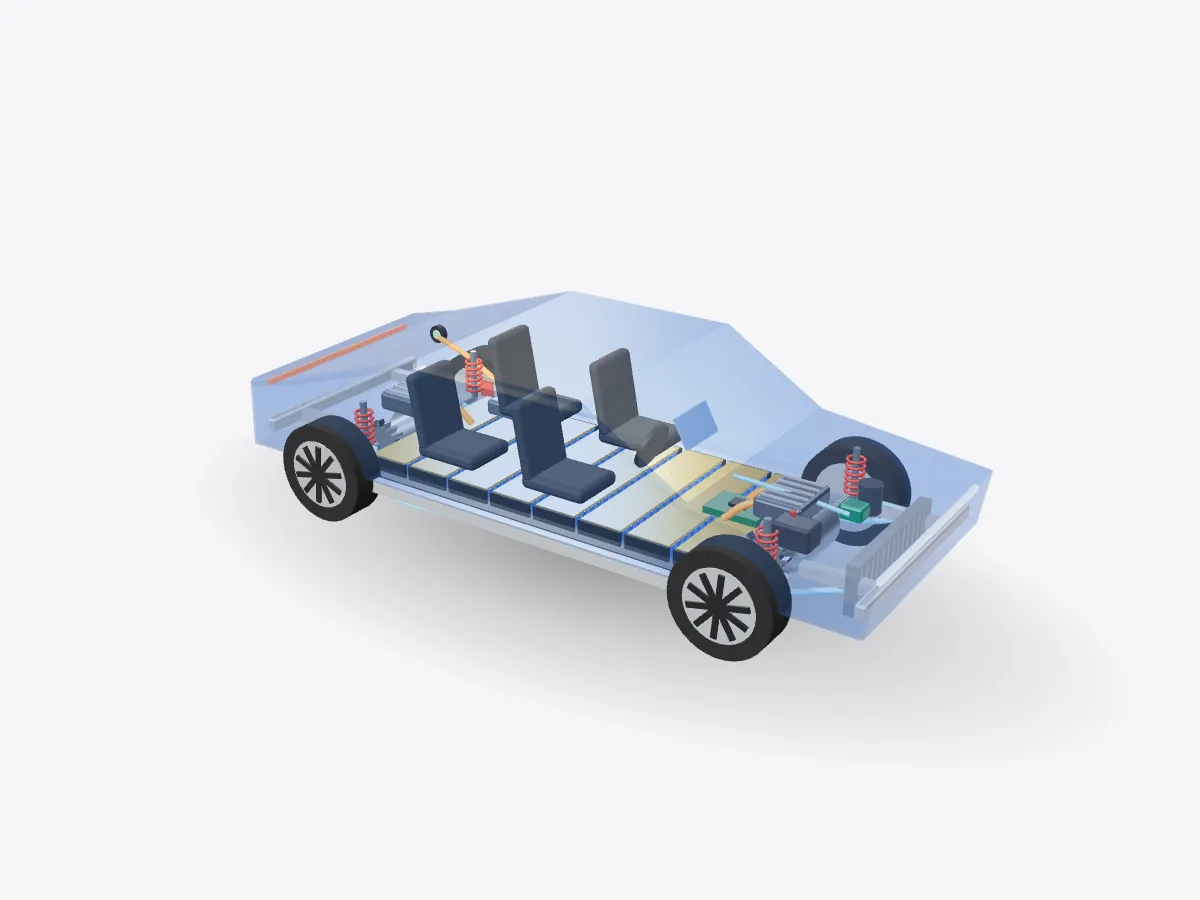
See how an electric car works in 3D: battery pack and cells, motors, inverters, charging, cooling and regenerative brakes. Explode the skateboard chassis.
Drag to orbit, pinch or scroll to zoom, tap any part.
How it works · Vehicles
Take away the engine, fuel tank and gearbox, and what's left is a flat battery, two compact motors and a lot of clever electronics.
Fan-made educational model, not affiliated with or endorsed by Tesla, Inc. or any brand mentioned.
Scores are saved on this device only.
01 / 05
Overview
See how an electric car works in 3D: battery pack and cells, motors, inverters, charging, cooling and regenerative brakes. Explode the skateboard chassis.
Drag to orbit, pinch or scroll to zoom, tap any part.
02 / 05
Explode
Keep scrolling and every part slides away from the centre, so you can see how they fit together.
03 / 05
Slice
A section plane sweeps through the model as you scroll. Pick an axis and set the depth yourself.
04 / 05
Parts
Pick a part or tap a glowing dot. It lights up and everything else fades back.
05 / 05
Facts
Slowing down with the motor puts energy back into the battery.
Most EVs use a single fixed reduction gear.
Inverters turn battery DC into AC for the motors.
Explained
An electric car swaps the engine, fuel tank and multi-speed gearbox for a battery, one or more electric motors and the power electronics that join them. Most modern EVs are built on a skateboard layout: a flat battery pack fills the floor between the axles, with a compact drive unit at one or both ends. The body and cabin sit on top. This model is a generic car, not any particular brand.
Putting the heaviest part of the car low in the floor gives it a low centre of gravity, which helps handling. It also frees up space: with no engine in front there's often a storage compartment where it would have been, and the cabin floor can be flat.
The battery pack is made from thousands of lithium-ion cells, grouped into modules and wired in series and parallel to reach a high voltage, often around 400 or 800 volts. Some cars use cylindrical cells, named for their size; an 18650 cell is 18 millimetres across and 65 millimetres long. Others use flat pouch or prismatic cells.
The battery management system is the pack's guardian. It measures the voltage and temperature of every group of cells, balances their charge so none is overcharged, and limits power when the pack is too hot or too cold. A liquid cooling loop runs under the modules to keep them in the right temperature range, warming them in winter and cooling them during fast charging.
The battery supplies direct current, but most EV motors run on alternating current. The inverter switches the DC on and off thousands of times a second to make AC at whatever frequency the motor needs, which sets its speed and torque. Electric motors pull strongly from a standstill and spin happily to very high speeds, so most EVs use a single fixed reduction gear instead of a gearbox.
Lift off the accelerator and the inverter runs the motor as a generator. That slows the car and sends energy back into the battery, which is called regenerative braking. The friction brakes are still there for hard stops. Explode the model to lift the body off the skateboard, or open Play to remove one system at a time.
Fan-made educational model, not affiliated with or endorsed by Tesla, Inc. or any brand mentioned.
D3DDD
D3DDD makes them: product cutaways, exploded views, architectural renders and technical drawings.